

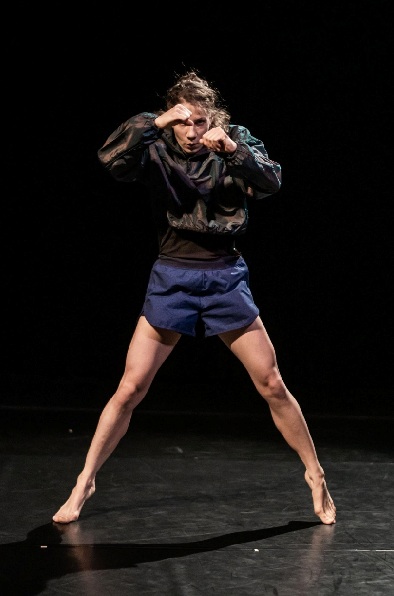
 Belçikalı dansçı ve koreograf Loraine Dambermont, solo çalışması Toujours de 3/4 face! ile bu eylülde 8. Istanbul Fringe Festival’deydi. “Fringe Solo Kısalar” programında izlediğimiz performanslar arasında, titiz işçiliği ve güçlü sahne varlığıyla öne çıktı. Koreografi de müzik de Dambermont’un kendisine ait; prodüksiyon da aynı özenle tasarlanmış ve uygulanmıştı. Özellikle ışık tasarımı ve onun kusursuz uygulanışı etkileyiciydi.
25 Kasım Kadına Yönelik Şiddete Karşı Uluslararası Mücadele Günü yaklaşırken; işin zamanla kazandığı feminist okumayı, bir tür karatesiz karateyi, gösteriyi müzikten başlayarak nasıl kurguladığını, İstanbul Fringe Festivali’nde paylaştığı atölyeyi ve kısaca yeni trio işi T’façon on est en 2012’yi konuştuk.
Söyleşi: Banu Açıkdeniz
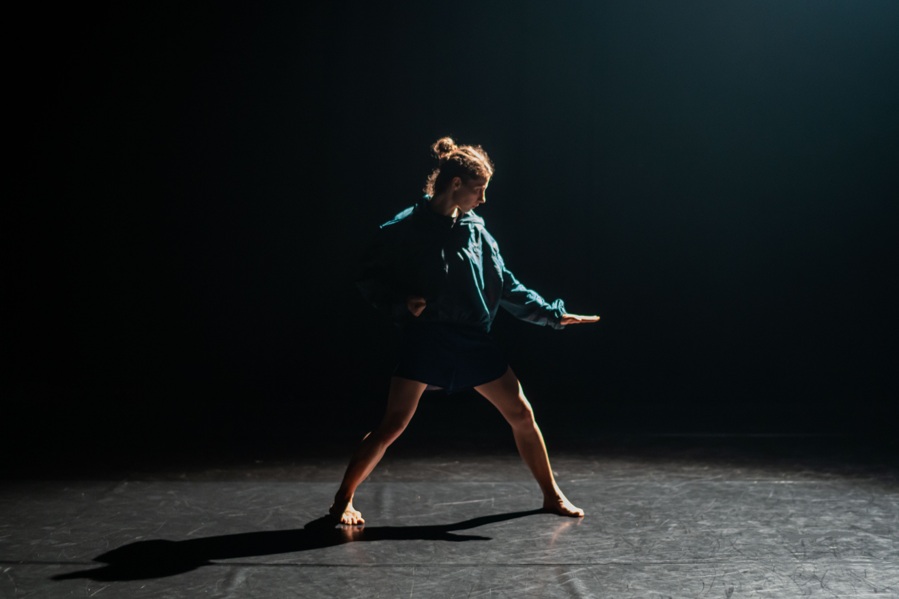
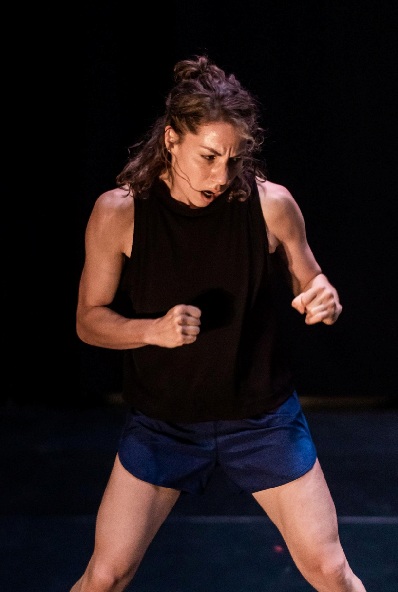
Toujours de 3/4 face! (Hep Üç Çeyrek Profil!), “3/4 face” (üç çeyrek profil) duruşunu en iyi savunma pozisyonu olarak tarif eden eski Belçikalı karateci Johnny Cadillac’ın bir kaydı üzerine kurulu. Yirmi dakika boyunca onun sözlerini hiper hızlı, kesin ve çoğu zaman mizahi bir hayatta kalma kılavuzuna dönüştürüyorsun. Gösteriyi izlerken karateyle ama aynı zamanda boksla ilgili olduğunu hissettim. Dövüş sanatları geçmişin var mı?
Hayır.
Peki karateyi seçmenin özel bir nedeni var mıydı? Yoksa konuşmanın kendisi mi ilgini çekti? Yaşı ilerlemiş bir sporcunun anlattıkları zaten farklı açılardan pek çok malzeme barındırıyor.
Hayır. Sadece Johnny Cadillac karateden bahsettiği için. Başka bir spordan bahsetseydi başka bir sporu yapardım. Koreografimi onun konuşmasına uyarladım. Onu çok sevdim; yoğunluğunu, bu işe duyduğu tutkuyu. Karateden bahsediyordu, ben de “tamam, bununla ilerleyelim” dedim.
Hiç karate öğrenmedim, boks da yapmadım. Bu daha çok dövüş imgesiyle ilgili. Her şeyi karıştırmayı seviyorum. Karate hakkında hiçbir şey bilmediğime göre neden hareket üretip dövüş havasında kalmayayım? Duyduğunuz terimlerin hiçbirini ben de bilmiyorum, ama karateden geldiklerini biliyorum. Ben adamı takip ettim.
 Kaydın ne zaman yapıldığını hatırlıyor musun? Yeni bir kayıt mı, yoksa eski mi?
2015’ten.
Başta, bugün öz-savunmaya ihtiyaç duyduğumuzdan, onu zihnimizde ve kültürümüzde nasıl taşıdığımızdan söz etmiştin. Bu proje içinde kadınlar için öz-savunma ihtiyacını nasıl tarif edersin? İşi üretirken feminist bir yaklaşımın var mıydı?
Dürüst olmak gerekirse pek yoktu. O sonradan geldi, gösteriyi çok defa oynadım, beş yılda 70 kez. Bir kadın, bir dansçı ve bir performans sanatçısı olarak taşıdığım bir şeye dönüştü ve seyircide yarattığı etkiyi görüyorum. Gelişti. Ama ilk yaklaşımım bununla ilgili değildi. Şöyle düşünmüştüm: Ben bir dansçıyım, bir bedenim var ve bu dövüş mesajını taşımak istiyorum; meydan okuma, savaşa gitmek, basitçe insan olmak üzerine bir şey.
Sesin ve müziğin etkisini de çok sevdim; onun söylediğini gerçekten koreografiye dökebilmeyi, “bedenini çeyrek döndür, güvendesin” gibi. Tabii bu soyut. Bir pozisyon yüzünden hayatta kalmazsınız; çeyrek dönmüş olsanız da savunmasızsınız. Ama bu fikri zorlamayı sevdim: Ya bu kavramı alıp etrafına bir şey inşa edersek?
Bir sürü katman var. Seyirci olarak kendi deneyiminizi getiriyorsunuz ve pek çok şeyle bağ kurabiliyorsunuz. Gösteriden sonra insanlar benimle konuştuğunda kendi deneyimlerini anlatıyorlar. Bir kadın olarak bunu güçlü bir şekilde hissettim, çünkü bu öfkeyle ve haklar için verilen mücadelelerle bir bağ kuruyorum. Pek çok yöne gidebilirsiniz ve asıl sevdiğim bu: Ne olduğunu size ben söylemiyorum, alışverişi bedenim aracılığıyla yapıyoruz. Beş yıl önce bunların farkında değildim. Belki biraz naiftim. Zorlayıcı ve güçlü olduğunu biliyordum ama bütün katmanlarıyla değil. Sanırım bu yüzden pek çok insana, belki kadınlara da, söyleyecek bir şeyi var.
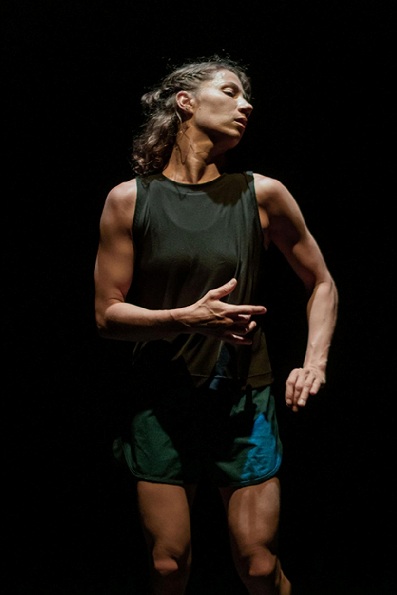 Bu iş dansçının fiziksel ve zihinsel dayanıklılığını zorluyor. Hareketler o kadar kesin, o kadar özenle çalışılmıştı ki bu kadar detaylı bir iş görmeyi beklemiyordum. Mekânı kullanımın da yaratıcıydı: Dövüş sanatlarında sahnede pek yer değiştirme yok, bu soloyu çok küçük bir yerde de yapabilirsin; ama yön değiştirerek mizanseni tekdüzelikten kurtarıyorsun. Bölümlerdeki ritmik ve atmosferik deiğişimlerle takibi çok keyifli bir akış kurmuşsunuz. Örneğin bir noktada çok dar bir ışığın içindesin ve dans, çok daha güçlü, belki şiddetli bir hale geliyor. Bazen gülüyoruz, bazen geriliyoruz. Nereden başladın? Metinden mi, müziği yapmaktan mı, dansın belirli bir bölümünden mi?
Müzikten başladım. Önce bütün parçayı yaptım. Seste ana sample’ı, güçlü sözleri duyuyorsunuz; benim için çekirdek onlar, o yüzden onları bir dosyada topladım. Sonra kahkahalar başka bir dosyada, sonra atmosfer için eklediğim çığlıklar, sonra şarkı. Önce eskizler yaptım, sonra sekansı baştan sona koreografiye döktüm.
İlk blok bunun ne olduğunu anlatıyor: Pozisyon bu, vesaire. Sonra şöyle düşündüm: Gerçekten yorulup tükenene kadar devam edeceğim, sonra başka bir yere gitmemiz gerek. Bedenimin dönüşmesini seviyorum: terliyorum, yoruluyorum. Sonra kahkaha geliyor, az önce olana bir yorum olarak. Komik mi, değil mi? Öyle tükenmişsiniz ki kendinize gülüyorsunuz: Ben ne yapıyorum, bu çılgınlık. Aslında kahkaha en sevdiğim bölüm.
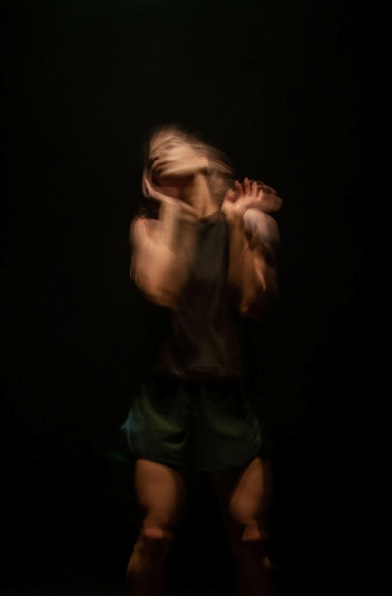
Sonra mikro hareketlere dönüşüyor; küçük ve çok hızlı. Koreografisi en zor bölüm buydu. Mümkün olduğunca hızlı olsun istedim, kontrolün doruk noktası. En son onu yaptım, o yüzden hâlâ başından daha taze. Başını çok iyi biliyorum; son bölüm ise bunca gösteriden sonra bile biraz kırılgan, çünkü çok detaylı ve kondisyonuma, nasıl hissettiğime bağlı. Psikolojik olarak da zor: Gerginsem ya da biraz üzgünsem beni gerçekten etkiliyor. Yani sıfırdan yirmi dakikaya kadar kurdum ve en sonda biraz doğaçlama var, çünkü koreografi yapmaktan yorulmuştum. Kendime şöyle dedim: Bırak gitsin, sana verdiğinin keyfini çıkar.
 Bu performans ciddi bir kondisyon istiyor. Dansçının hep belli seviyede bir kondisyonu vardır ama bazı işler daha fazlasını talep ediyor; belli bir seviyenin altında oynanamıyor. Özellikle işi aylarca oynamadığın dönemlerden sonra gösteri öncesi o seviyeye ulaşmak zor olmalı. Sanırım çok hazırlık gerekiyor?
Hazırlanmanın en iyi yolu gösteriyi yapmak. Gösteriden önce koşuya çıkabilirim, spor salonuna gidebilir ya da yüzebilirim, spor yapmayı seviyorum; ama kondisyonu kazanmanın en iyi yolu, bütün gösteriyi kimsenin izlemediği bir stüdyoda baştan sona yapmak. Zor ama aynı zamanda odaklanmanın bir yolu ve hafıza için de iyi.
Turnenin başında çok gergindim, çünkü bir aradan sonra yapana kadar nasıl olacağını asla bilemiyorsunuz. Ama sahnede olmakta büyülü bir şey de var, sanırım her dansçı için. Prova yaparken yüzde 80’indesiniz, sonra sahneye çıkıyorsunuz ve bazen kendinizden beklemediğiniz bir şey yapıyorsunuz: Gerçekten o kadar yükseğe mi zıpladım? Bedene ve yılların eğitimine güvenmekle ilgili. Uzun vadeli bir hazırlık. Ve bu benim işim; bunu yapabiliyor olmalıyım.
Harekete bu yaklaşımı seviyorum. Herkes yapmıyor belki ama ben zorlanmayı ve güçlü olmayı hep sevdim. Şimdi yeni bir işim var, dövüş havasını sürdüren bir trio. Birlikte dans ettiğim dansçılar her seferinde gerginleşiyor: Toplayıp sonra patlatmamız gereken çok fazla enerji var. Zor ama çok fazla adrenalin var.
Dövüş havasını sürdüren yeni trio neyle ilgili?
Adı T’façon on est en 2012. Bir yıl önce, Ekim 2025’te Biennale Charleroi Danse programında prömiyer yaptı. İki erkek dansçı ve benden oluşan bir trio; Mes années bagarre adlı daha büyük bir projenin ikinci opusu. “Kavgacı yıllarım” diye çevrilebilir.
Bu sefer konu öz-savunma değil, provokasyon. İnternetteki atışmalardan esinlendim. Ana ilham kaynağım 2012’de Fransa’da yaşanan ünlü bir internet kavgası, Clash des Lopez; adında 2012 olmasının nedeni bu.
İş, şiddet üzerine, özellikle internette karşılaştığımız şiddet, örneğin dövüş eğitimi videoları üzerine daha derin bir düşünmenin devamı. Toksik erkekliğin işlevsizliğinin altını çizmek için yine erkeklerin seslerini ve davranışlarını kullandım. Ses kuşağıyla ilgili çalışma süreci de benzer: Videolardan ses sample’ları üretip onlarla bir müzik bestesi yaptım. Çok ritmik ve yine tempoyu zorlayan bir müzik.
Solodan farkı ne oldu?
Daha işlenmiş, koreografik fikirlerimde daha fazla özgürlük olan bir iş diyebilirim. Daha fazla sahne tasarımı var, oynadığımız nesneler var, kostümler daha incelikli. Bu ikinci işi yapmak için daha fazla bütçem de oldu; prodüksiyonu daha güçlü bir gösteri. Oynaması da çok heyecanlı. Dansçılar inanılmaz, sahnedeki enerji resmen ateş gibi!
Dans eğitimini Codarts’ta almışsın. Eğitimin dans üzerineydi ama müzik de üretiyorsun ve sahnede çok güçlü bir oyunculuğun var. Tiyatro ve müzik eğitimin var mı? Ve müzikal yanın nasıl gelişti?
Çocukken müzik eğitimi aldım, basit armoni, dört ya da altı yıl flüt çaldım. Sonra piyanoyu ve gitarı kendi kendime öğrendim. Hayatım boyunca müzikle çevriliydim. Afrika ritimleri üzerine de çok çalıştım; bu bana ritim hakkında çok şey öğretti. Beste yaparken aslında sesle ritim kuruyorum.
Bir de hip-hop yaptım, o da çok ritmik. Gençken herkesin müzikte aynı anı birlikte yakalaması gereken, çok kesin birçok koreografi öğrendim. Sanırım müzikle ve kesinlikle kurduğum ilişki bu hip-hop geçmişinden geliyor. Sonra dans eğitimimde birçok stil öğrendim ve kendi gösterilerimi yapmakla ilgilenmeye başladım.
Bugünlerde nerede yaşıyor ve çalışıyorsun?
Brüksel’de yaşıyorum; ağırlıklı olarak Belçika ve Fransa’da çalışıyorum, işlerimle uluslararası turnelere de çıkıyorum. Toujours de 3/4 face! 2021’den beri turnede; 20’den fazla ülkede 70 kez kadar oynandı.
Serbest çalışıyorum, işlerimi kendi adımla imzalıyorum. Yeni bir iş üretirken hem Belçika’da hem yurt dışında rezidanslara başvuruyorum. Elbette Belçika’yla bağım daha güçlü. Örneğin Brüksel’de yerel dans ve performans sanatçılarının gelişimini desteklemek için kurulmuş, çok bilinen bir mekân olan Grand Studio bana eşlik ediyor. 2023’ten beri de işlerimin prodüksiyonunu, satışını ve gelişimini üstlenen Bloom Project ile çalışıyorum.
Son olarak İstanbul’da Fringe Festival’de verdiğin A Danced Self-Defence atölyesini sormak istiyorum. Gelmek istedim ama gelemedim, gerçekten kaçırdığıma çok üzüldüm. Atölyeyi nasıl kurdun? Gösterilerle birlikte sık sık paylaşıyor musun, yoksa ilk kez mi yaptın? Karate hareketleri ve onların dansa dönüşmüş halleri üzerine mi çalışıyorsun? Yöntemin ne?
Bir yöntemim olduğunu düşünmüyorum. Karate hareketlerinden çok işin sürecini paylaşıyorum. Karateyi ve dansı öğretip sonra karıştırmıyorum. Katılımcılara şunu söylüyorum: Karate hakkında hiçbir şey bilmiyorum; bu gösteriyi yaptım ve içinde benim koreografisini yaptığım karate hareketleri var, size bunu öğreteceğim ve bakalım bedeninizde ne olacak. Gösteriden bazı sekanslar alıp repertuvar gibi öğretiyorum.
Kahkaha bölümünü yapmayı ve insanların kendi duygularıyla doğaçlama yapmasına alan açmayı da çok seviyorum. Kavramı biliyorsunuz: ritimde kalmak, ve bunun fizikselliği. Ama siz nasıl gülerdiniz, kendi göğüsünüzle? Bunu kendi bedeninize nasıl alırdınız? Size sağ, sol öğretmeyeceğim.
Gösteriyi müzikle ilişkisi içinde nasıl yarattığımı paylaşmayı seviyorum. Küçük bir pad’im, küçük bir klavyem var; her nota bir ses, bam, bum bum- ses efektleri-, ve hangi hareketin ona eşlik ettiğini gösteriyorum. Gösteriyi de aslında böyle yaptım: her seferinde bir hareket, sonra birbirine bağlayarak. Çok eğlenceli ve sese tam oturma baskısı yok, çünkü o çok zaman alıyor; ama nasıl kurduğumdan küçük bir tat alıyorsunuz.
Atölyeyi çok sık yapmadım; her gösteride yapmıyorum. Ama her yaptığımda çok keyif alıyorum, o yüzden önümüzdeki gösterilerde daha fazla nasıl sunabileceğimize bakacağız. İstanbul çok güzeldi. Gerçekten çok keyif aldım.
Teşekkürler Loraine. Keşke Türkiye’de daha çok insan bu işi görebilse; seni yeniden davet edelim isterim.
Harika olur. Ben de tekrar gelmeyi çok isterim.
İş hakkında
Eski bir Belçikalı karateci olan Johnny Cadillac’a göre “3/4 face” en iyi savunma pozisyonudur: o kadar kesin bir duruş ki kaçınılmaz olarak bir mükemmeliyetçilik isteğini ve derin bir kontrol arzusunu ele verir. Loraine Dambermont bu ilkeyi sahipleniyor ve canlı bir eğitim (tutorial) aracılığıyla en iyi gizli öz-savunma becerilerini açıklıyor. Toujours de 3/4 face!, mizah dokunuşlarıyla bir hayatta kalma kılavuzu olarak sahnelenen, 20 dakikalık hiper enerjik bir solo. Dambermont, karmaşık Belçika kimliğini de öz-ironinin doruğuna yönelen hareketlerle ele alıyor. Performans, hiper hızlı hareketlerden oluşan bir maraton ile kendi müzikalitesinin aşırı kesinliği arasında kısıtlanmış bir bedenin sınırlarını zorlayarak sanatçının fiziksel ve zihinsel virütözlüğüne meydan okuyor.
« Proje de ulaşılan sonuç da gerçeküstücülüğün konusu – elbette Belçika gerçeküstücülüğünün » — Nicolas Villodre
Fragman: vimeo.com/906377560
Künye
Koreograf, besteci ve performans: Loraine Dambermont
Ses miksajı danışmanı: Victor Petit
Işık tasarımı: Rémy Urbain
Teknik sorumlu: Gaspar Schelck
Sahne amiri (dönüşümlü): Adèle Evans / Chamsedine Madec / Gaspar Schelck
Dış göz: Monica Gomes
Yapım: Lodbmt
Yapım / turne yönetimi: BLOOM Project
Partner: Le Théâtre de la Balsamine
Destekleyenler: Iles/Suitcase Bruxelles, Le Théâtre Marni – Bruxelles, Garage29 – Bruxelles, Studio 28 – Roubaix, L’Armande – Liège, Le Centre Culturel Bruegel – Perpetuum MOBILE Festival – Bruxelles, La Roseraie – Bruxelles, Theater aan de Rijn – Dance Flavours, Arnhem ve Wallonie-Bruxelles International
Fotoğraflar: Hichem Dahes
Bağlantılar
- Loraine Dambermont: lodbmt.com
- Bloom Project: bloomproject.be
* “3/4 face” (trois-quarts) resim ve fotoğraftan gelen bir terim: Yüzün ya da bedenin tam karşıdan değil, hafif yana dönük, yani “üç çeyrek profil” durması (bkz. https://en.wikipedia.org/wiki/Portrait_painting#three-quarter_view). Johnny Cadillac’ın tarif ettiği savunma duruşu, dövüş sanatlarındaki “bladed stance”ı (yan duruş) hatırlatıyor.,
Loraine Dambermont on Toujours de 3/4 face!*
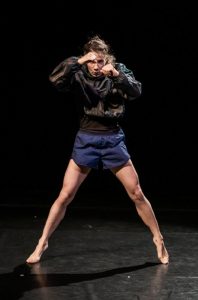 Belgian dancer and choreographer Loraine Dambermont brought her solo Toujours de 3/4 face! to the 8th Istanbul Fringe Festival this September. Among the performances we saw in the “Fringe Solo Shorts” programme, her work stood out for its meticulous craftsmanship and powerful stage presence. Both the choreography and the music were created by Dambermont herself, while the production was equally carefully conceived and executed. The lighting design, in particular, and its precise execution were impressive.
With 25 November, the International Day for the Elimination of Violence against Women, approaching, we spoke about the feminist reading the piece gradually took on, a kind of karate without karate, how she developed the piece starting with the music, the workshop she shared at Istanbul Fringe Festival, and, briefly, her new trio T’façon on est en 2012.
Interview: Banu Açıkdeniz
Toujours de 3/4 face! (Always Three-Quarter Face!) is built around a recording of Johnny Cadillac, a former Belgian karateka, who describes the “3/4 face” position as the best defensive stance. Over twenty minutes, you transform his words into a hyper-fast, precise and often humorous survival guide. Watching the performance, I felt it was about karate, but also about boxing. Do you have a background in martial arts?
No.
Was there a particular reason you chose karate, then? Or was it the speech itself that interested you? The words of an older athlete already offer a great deal of material from many different angles.
No, simply because Johnny Cadillac was talking about karate. If he had been talking about another sport, I would have done that instead. I adapted my choreography to his speech. I really loved him, his intensity and the passion he brought to what he was doing. He was talking about karate, so I thought, “Okay, let’s go with this.”
I’ve never learned karate, and I’ve never done boxing either. The piece is actually more about the image of fighting. I like mixing things up. I thought, “Since I know nothing about karate, why not create movement while staying in the spirit of fighting?” I don’t know any of the terms you hear in the recording either, but I know they come from karate. I simply followed the guy.
Do you remember when the recording was made? Is it recent, or does it go back further?
It’s from 2015.
When we were talking before the interview, you mentioned how much we need self-defence today, and how we carry that need in our minds and in our culture. How would you describe the need for self-defence among women in relation to this piece? Did you have a feminist approach when you created it?
To be honest, not really. That came later. I’ve performed the piece many times — around 70 times over five years. It gradually became something I carry with me as a woman, a dancer and a performer, and I can see the impact it has on the audience. It evolved. But that wasn’t my initial approach. I thought: I’m a dancer, I have a body, and I want to carry this fighting message — something about challenge, about going to war, about simply being human.
I also loved the impact of the voice and the music, and the possibility of translating what he says directly into choreography, things like “turn your body a quarter and you’re safe.” Of course, it’s abstract. You don’t survive simply because of a particular position; even if you’ve turned a quarter, you’re still vulnerable. But I liked pushing that idea: what if we took this concept and built something around it?
There are so many layers to the piece. As an audience member, you bring your own experiences and can connect with it in many different ways. When people talk to me after the performance, they often share their own experiences. As a woman, I felt this very strongly because I connect with that rage and with the struggles for rights. You can take it in many directions, and that’s what I love about it: I’m not telling you what it means; we communicate through my body. Five years ago, I wasn’t aware of all these layers. Perhaps I was a little naive. I knew the piece was challenging and powerful, but I hadn’t yet recognised everything it could contain. I think that’s why it has something to say to so many people, and perhaps to women too.
The piece pushes the dancer’s physical and mental endurance. The movements were so precise and so carefully worked out that I honestly wasn’t expecting such a level of detail. Your use of space was creative, too. In martial arts, there’s not much travelling across the stage, so you could perform this solo in a very small space, almost without moving from the spot. Yet by constantly changing direction, you keep the staging from becoming monotonous without losing the audience’s focus. The rhythmic and atmospheric shifts between sections create a flow that’s a real pleasure to follow. At one point, for example, you’re in a very narrow beam of light, and the dance becomes much more intense, perhaps even violent, relying on very small gestures and facial expressions. Sometimes we laugh, sometimes we feel tense. Where did you begin? With the text, with composing the music, or with a particular section of the dance?
I started with the music. First, I created the entire track. You hear the main sample in the sound, those powerful words. For me, they’re the core of the piece, so I put them together in one file. Then I put the laughter in another file, followed by the screams I added for atmosphere, and then the song. I made some sketches first, and then choreographed the whole sequence from beginning to end.
The first section explains what it is: this is the position, and so on. Then I thought, I’ll keep going until I’m really tired and exhausted, and after that we need to go somewhere else. I like seeing my body transform: I sweat, I get tired. Then the laughter comes, as a comment on what has just happened. Is it funny or isn’t it? You’re so exhausted that you end up laughing at yourself: What am I doing? This is crazy! The laughter is actually my favourite part.
Then it turns into micro-movements: small and extremely fast. That was the most difficult section to choreograph. I wanted it to be as fast as possible, reaching a peak of control. I created that section last, so it’s still fresher in my mind than the beginning. I know the beginning very well, but the final section is still a little fragile, even after all these performances, because it’s so detailed and depends on my physical condition and how I’m feeling. It’s psychologically demanding, too. If I’m nervous or a little sad, it really affects me. So I built the piece from zero to twenty minutes, and there’s a little improvisation at the very end because I was tired of choreographing. I told myself: just let go and enjoy what it gives you.
This performance demands a great deal of physical conditioning. Dancers generally maintain a certain level of fitness, but some pieces demand more; they simply cannot be performed below a certain level. It must be difficult to get back into that condition before a performance, especially after not performing the piece for several months. I imagine it requires a lot of preparation?
The best way to prepare is to perform the piece itself. Before a show, I might go running, go to the gym or swim — I love doing sports — but the best way to build up my stamina is to run through the entire performance in a studio, with nobody watching. It’s difficult, but it’s also a way of focusing, and it’s good for my memory.
At the beginning of the tour, I was very nervous because, after a break, you never really know how it’s going to go until you actually perform the piece. But there’s also something magical about being on stage, I think, for every dancer. When you’re rehearsing, you’re at 80 per cent; then you step onto the stage and sometimes you do things you didn’t expect of yourself. You think, “Did I really jump that high?” It’s about trusting your body and all those years of training. It’s a long-term preparation. And this is my job; I should be able to do it!
I love this approach to movement. Maybe not everyone does, but I’ve always enjoyed being challenged and feeling strong. I now have a new work, a trio that continues this fighting spirit. The dancers I work with get nervous every time because there’s so much energy we have to build up and then release in an explosion. It’s demanding, but there’s also a lot of adrenaline.
What is this new trio about?
It’s called T’façon on est en 2012. It premiered a year ago, in October 2025, as part of the Biennale Charleroi Danse programme. It’s a trio featuring two male dancers and myself, and it’s the second opus of a larger project called Mes années bagarre, which could be translated as “My brawling era.”
This time, it’s not about self-defence but provocation. I was inspired by online arguments and clashes. My main source of inspiration was a famous online altercation that took place in France in 2012, known as Clash des Lopez. That’s why 2012 appears in the title.
The piece continues a deeper reflection on violence, particularly the kind of violence we encounter online, for example in fighting tutorial videos. Once again, I used men’s voices and behaviours to highlight the dysfunction of toxic masculinity. The process of creating the soundtrack was similar: I made sound samples from the videos and composed music using them. It’s very rhythmic and, once again, pushes the limits of tempo.
How was it different from creating the solo?
I’d say it’s a more elaborate work, one that gave me greater freedom in my choreographic ideas. There’s more scenography, objects that we play with, and more sophisticated costumes. I also had a bigger budget for this second work, so it’s a stronger production. Performing it is really exciting, too. The dancers are incredible, and the energy on stage is literally on fire!
You studied dance at Codarts. Your education was in dance, but you also compose music and have a strong presence as a performer on stage. Did you study theatre or music as well? And how did your musical side develop?
I studied music as a child, including basic harmony, and played the flute for four or six years. Later, I taught myself piano and guitar. I’ve been surrounded by music all my life. I also spent a lot of time studying African rhythms. Do you know the djembe? I used to practise with it. That taught me a lot about rhythm. When I compose, I’m essentially creating rhythm with sound.
I also did hip-hop, which is very rhythmic, too. As a teenager, I learned a lot of highly precise choreography in which everyone has to hit exactly the same moment in the music. I think my relationship with music and precision definitely comes from that hip-hop background. Then, during my dance education, I learned many different styles, of course, and gradually became interested in creating my own performances.
Where are you living and working these days?
I live in Brussels and work mainly in Belgium and France, while also touring internationally. Toujours de 3/4 face! has been touring since 2021 and has been performed around 70 times in more than 20 countries.
I’m freelance and sign my work under my own name. When developing a new piece, I apply for residencies both in Belgium and abroad. Naturally, my connections are stronger in Belgium. For example, Grand Studio, a well-known Brussels venue established to support the development of local dance and performance artists, supports my work. And since 2023, I’ve been working with Bloom Project, which takes care of the production, booking and development of my pieces.
Finally, I’d like to ask about the A Danced Self-Defence workshop you gave at Istanbul Fringe Festival. I wanted to attend but couldn’t, and I was really sorry to miss it. How did you develop the workshop? Do you often offer it alongside your performances, or was this the first time? Do you work with karate movements and their transformation into dance? How does your approach work?
I don’t think I have a particular method. I share the creative process behind the work rather than focusing on karate movements themselves. I don’t teach karate and dance separately and then mix them together. I tell the participants: “I don’t know anything about karate. I created this performance, which happens to include karate movements that I choreographed. I’ll teach you those movements, and we’ll see what happens in your body.” I take some sequences from the performance and teach them as a kind of repertoire.
I also really enjoy working on the laughter section and giving people space to improvise with their own emotions. You know the concept: staying with the rhythm and exploring its physicality. But how would you laugh? How would you do it with your own chest? How would you bring it into your own body? I’m not going to teach you right and left.
I like sharing how I created the piece in relation to the music. I have a little pad and a small keyboard; every note becomes a sound — bam, boom, boom — sound effects, and I show which movement goes with each one. That’s actually how I created the performance: one movement at a time, and then connecting them. It’s a lot of fun, and there’s no pressure to match the sound perfectly, because that takes a great deal of time. But you get a little taste of how I constructed the piece.
I haven’t given the workshop very often; I don’t offer it every time I perform. But I enjoy it so much whenever I do it, so we’ll see how we can include it more often in future performances. Istanbul was beautiful. I really enjoyed my time there.
Thank you, Loraine. I wish more people in Turkey could see this performance. I’d love to invite you back.
That would be wonderful. I’d love to come again!
About the piece
According to Johnny Cadillac, a former Belgian karateka, “3/4 face” is the ultimate defensive position: a posture so precise that it inevitably betrays a will of perfectionism and a deep desire for control. Loraine Dambermont makes this principle her own and, through a live tutorial, reveals her best secret self-defence skills. Toujours de 3/4 face! is a 20-minute hyper-energetic solo performed as a survival guide with hints of humour. Dambermont also tackles the complex Belgian identity through movements all directed towards the paroxysm of self-mockery. The performance challenges the physical and mental virtuosity of the performer by pushing the limits of a constrained body between a marathon of hyper-fast movements and the extreme precision of its own musicality.
« The project like the result achieved are matters for Surrealism – Belgian Surrealism, of course » — Nicolas Villodre
Trailer: vimeo.com/906377560
Credits
Choreographer, composer and performer: Loraine Dambermont
Sound mixing advisor: Victor Petit
Light design: Rémy Urbain
Technical manager: Gaspar Schelck
Stage manager (alternating): Adèle Evans / Chamsedine Madec / Gaspar Schelck
Outside eye: Monica Gomes
Production: Lodbmt
Production / tour manager: BLOOM Project
Partner: Le Théâtre de la Balsamine
Supported by: Iles/Suitcase Bruxelles, Le Théâtre Marni – Bruxelles, Garage29 – Bruxelles, Studio 28 – Roubaix, L’Armande – Liège, Le Centre Culturel Bruegel – Perpetuum MOBILE Festival – Bruxelles, La Roseraie – Bruxelles, Theater aan de Rijn – Dance Flavours, Arnhem and Wallonie-Bruxelles International
Photos: Hichem Dahes
Links
- Loraine Dambermont: lodbmt.com
- Bloom Project: bloomproject.be
* “3/4 face” (trois-quarts) is a term borrowed from painting and photography. It describes a face or body turned slightly to one side rather than facing directly forward — a “three-quarter view” (see https://en.wikipedia.org/wiki/Portrait_painting#three-quarter_view). The defensive stance described by Johnny Cadillac recalls the “bladed stance” used in martial arts.